Software project management includes all the activities required to plan, develop, and deliver software in a proper way. It helps teams organize their work step by step so that everything runs smoothly. It also focuses on maintaining quality while completing the project within budget and deadline. Therefore, software project management provides a clear structure to handle the entire software development process from beginning to end.
For example, in a mobile application project, the manager first plans the features and requirements. Next, the manager assigns tasks to developers, designers, and testers based on their skills. Meanwhile, the progress of the project is regularly tracked to ensure everything is going as planned. If any issue arises, the manager takes action to solve it quickly.
Activities of Software Project Management
1. Project Planning
Project planning is the first and most important activity in software project management. It defines the project goals, scope, timeline, and required resources. Moreover, it gives a clear direction to the team about what needs to be done. Proper planning also helps avoid confusion and reduces risks during the project. Therefore, a well-planned project increases the chances of success.
2. Requirement Analysis
Requirement analysis involves collecting and understanding the needs of users. It ensures that the software is built according to user expectations. Additionally, it helps avoid mistakes during development by clearly defining requirements in advance. This step also improves communication between clients and developers. Therefore, it plays a key role in building useful software.
3. Scheduling
Scheduling focuses on setting timelines and deadlines for each task in the project. It helps the team complete work in an organized and timely manner. Moreover, it ensures that all activities are properly planned over a fixed period. This also helps in tracking progress and avoiding delays. Therefore, scheduling improves time management in the project.
4. Resource Management
Resource management deals with managing people, tools, budget, and materials required for the project. It ensures that resources are used efficiently without wastage. Moreover, it helps assign the right task to the right person based on skills. This improves productivity and reduces unnecessary costs. Therefore, proper resource management supports smooth project execution.
5. Risk Management
Risk management identifies possible risks that may affect the project. It also involves planning solutions to handle those risks effectively. Moreover, it helps reduce uncertainty and prepares the team for unexpected problems. This ensures that the project continues smoothly even during difficulties. Therefore, risk management improves project stability.
6. Quality Management
Quality management ensures that the software meets required standards and works correctly. It involves testing, reviewing, and improving the product. Moreover, it helps deliver a reliable and error-free system to users. This increases user satisfaction and trust in the software. Therefore, maintaining quality is essential for project success.
7. Communication Management
Communication management ensures proper information sharing among team members and stakeholders. It helps avoid misunderstandings and keeps everyone updated about project progress. Moreover, it improves coordination and teamwork. Regular communication also helps in solving problems quickly. Therefore, effective communication is key to successful project completion.
Diagram of Software Project management Activities
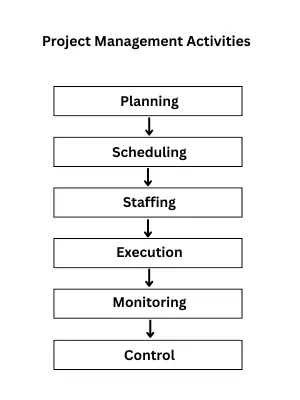
Figure: Activities in Software Project Management
Software Project Life Cycle
The Software Project Life Cycle (SPLC) is a step-by-step process used to develop software in a structured way. It ensures that the software is built efficiently, meets user requirements, and is delivered with good quality. Each phase has a specific role in the development process.
Following are the processes of software project lifecycle:-
1. Requirement Analysis
Requirement analysis is the first step in a software project where the team collects and understands user requirements. In this phase, developers and analysts interact with clients to identify their needs and expectations. Moreover, the team studies the problem and defines what the software should do and how it should perform. Proper requirement analysis helps in avoiding confusion and reduces future errors. It also creates a clear scope and documentation for the project. Therefore, this step forms the foundation of the entire software development process.
2. Design
Design is the phase where the system architecture and user interface are planned. The development team creates diagrams, models, and blueprints to show how the software will work. Moreover, design helps in organizing system components and defining data flow and structure. It ensures that the software will be efficient, secure, and user-friendly. A good design reduces coding errors and improves performance. Therefore, the design phase provides a clear roadmap for development.
3. Development (Coding)
Development is the stage where programmers write code to build the software based on the design. Developers use programming languages and tools to create different modules and functions. Moreover, coding converts design plans into a working software system. This phase requires proper coordination and technical skills. Errors and bugs are minimized through regular checks and testing during development. Therefore, development is the core activity of the software project.
4. Testing
Testing is the process of checking the software for errors, bugs, and performance issues. Testers run different test cases to ensure that the system works correctly under various conditions. Moreover, testing helps in improving quality and reliability of the software. It ensures that all features function as expected and meet user requirements. Different types of testing are used to detect and fix problems. Therefore, testing ensures a stable and error-free software system.
5. Deployment
Deployment is the stage where the software is released and made available to users. The system is installed on servers or devices for real-world use. Moreover, the deployment process ensures that the software runs smoothly in the actual environment. Proper configuration and setup are done to avoid technical issues. Users can now access and use the software for their tasks. Therefore, deployment marks the successful delivery of the project.
6. Maintenance
Maintenance is the final stage where the software is updated and improved regularly. The development team fixes bugs, updates features, and improves performance over time. Moreover, maintenance ensures that the software remains useful and secure in changing environments. It also includes adding new features based on user feedback. Continuous support increases the software’s lifespan and reliability. Therefore, maintenance ensures long-term success of the software project.
Diagram of Software Project Life Cycle
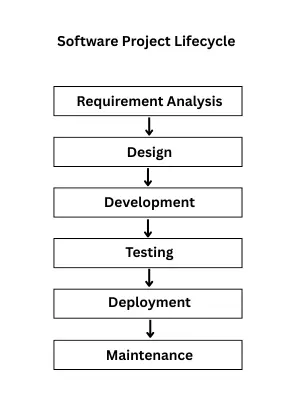
Figure: Software Project Life Cycle
Applications of Software Projects
1. Banking and Financial Systems
Software projects are widely used in banking and financial institutions to manage accounts, transactions, and customer data. These systems help in online banking, digital payments, and fund transfers securely. Moreover, software projects improve accuracy and reduce manual errors in financial operations. Banks use software to generate reports and monitor transactions in real time. Therefore, software projects play a vital role in modern banking systems.
2. Healthcare Systems
Software projects are used in hospitals and clinics to manage patient records and medical information. They help doctors track patient history, diagnosis, and treatment plans efficiently. Moreover, hospital management software supports appointment scheduling and billing processes. This improves patient care and reduces administrative work. Therefore, software projects are essential in healthcare services.
3. Education and E-Learning
Software projects support online education and digital learning platforms. Students can attend virtual classes, access study materials, and submit assignments online. Moreover, teachers can track student performance and provide feedback easily. Learning management systems improve accessibility and communication. Therefore, software projects enhance the education system.
4. E-Commerce and Online Shopping
Software projects are used to develop online shopping platforms and digital marketplaces. Customers can browse products, place orders, and make secure payments online. Moreover, businesses can manage inventory and sales through software systems. This improves customer convenience and business efficiency. Therefore, software projects are important in e-commerce applications.
5. Transportation and Logistics
Software projects help manage transportation and delivery systems efficiently. They track vehicles, routes, and delivery schedules in real time. Moreover, logistics software improves fuel management and route planning. This reduces delays and increases efficiency in transportation services. Therefore, software projects support logistics and supply chain management.
6. Industrial and Manufacturing Systems
Software projects are used in industries to control machines and automate production processes. These systems monitor performance and ensure product quality. Moreover, industrial software reduces manual work and increases production efficiency. It also helps in managing inventory and equipment. Therefore, software projects are widely used in manufacturing industries.
7. Entertainment and Media Industry
Software projects support video streaming, gaming, and digital media platforms. Users can watch movies, play games, and listen to music online. Moreover, media software helps in content management and distribution. This improves user experience and accessibility. Therefore, software projects play an important role in the entertainment industry.
Conclusion
Software project management activities and the project life cycle play an important role in developing software successfully. They help teams plan, execute, and deliver software efficiently. Therefore, organizations use these processes to ensure high-quality and timely results. Software Project Life Cycle provides a structured and systematic approach to software development. It helps in managing project activities from requirement analysis to maintenance. Moreover, SPLC improves quality, reduces risks, and ensures timely delivery of software. Each phase plays an important role in project success. Therefore, SPLC is essential for effective software project management and development.