Software projects often face many challenges during development and implementation. These problems arise due to complex requirements, changing technologies, and limited resources. Moreover, software development involves teamwork, planning, and proper coordination, which can sometimes create difficulties. If these problems are not handled properly, they may lead to project failure or delays. Therefore, understanding the problems associated with software projects is important for successful project management.
In addition, software projects require proper planning, clear communication, and skilled team members to avoid risks and errors. Many issues such as unclear requirements, budget constraints, time pressure, and technical difficulties affect project performance. Moreover, poor management and lack of communication can increase project complexity. Identifying these problems at an early stage helps in finding effective solutions. Therefore, studying the problems of software projects helps in improving quality and project success.
For example, while developing an e-commerce website, the team may face delays due to unclear product requirements or payment integration issues. As a result, the project may take more time and exceed the planned budget. Moreover, frequent changes in design or features can increase the workload for developers. Therefore, proper planning and clear communication are important to complete the project successfully.
Problems Associated with Software Projects
Software projects face many problems during development because of changing requirements, limited resources, and complex technologies. These problems affect project quality, time, and cost. Moreover, software development requires proper planning, coordination, and communication among team members. If issues are not handled early, they may lead to project failure or delays. Therefore, understanding the common problems associated with software projects helps in improving project management and achieving better results.
Following are the various problems associated with Software Projects:-
1. Requirement Issues
Requirement issues occur when project requirements are not clear or keep changing frequently. This creates confusion among developers and leads to incorrect development. Moreover, unclear requirements increase rework and waste time and resources. It becomes difficult to meet client expectations without proper requirement analysis. Proper documentation and communication can reduce this problem.
For example, a client asks for an e-commerce website but later changes features like payment gateway and product categories, which delays the project and increases workload.
2. Time Overrun
Time overrun happens when the project takes more time than planned. This usually occurs due to poor planning, unexpected issues, or frequent requirement changes. Moreover, delays in one phase affect the entire project schedule. It also creates pressure on developers and increases project cost. Proper scheduling and monitoring can help control time overrun.
For example, a mobile app planned for 3 months takes 6 months because of design changes and testing delays.
3. Cost Overrun
Cost overrun occurs when the project budget increases beyond the planned amount. This happens due to delays, requirement changes, or additional resources. Moreover, extra development time and tools increase overall expenses. Poor budget planning also leads to financial problems in the project. Proper cost management and planning can reduce this issue.
For example, a software project planned with a budget of ₹5 lakh increases to ₹8 lakh due to extra features and extended development time.
4. Technical Issues
Technical issues arise due to complex technologies and system integration problems. Developers may face difficulties in coding, testing, or using new tools. Moreover, lack of technical knowledge can slow down development. System crashes and compatibility problems also affect project performance. Proper technical training and testing can solve this issue.
For example, a web application fails to run properly because of compatibility issues between the database and programming language.
5. Resource Issues
Resource issues occur when there is a lack of skilled team members, tools, or equipment. This affects the speed and quality of development. Moreover, overloading team members with work reduces productivity. Poor resource allocation leads to delays and errors. Proper resource management is needed for project success.
For example, a project gets delayed because there are not enough experienced developers in the team.
6. Communication Problems
Communication problems happen when team members and clients do not share information properly. This creates misunderstandings and confusion in project tasks. Moreover, poor communication leads to incorrect development and delays. Regular meetings and clear documentation can reduce this issue. Good communication improves teamwork and project performance.
For example, developers misunderstand client requirements because of lack of proper meetings and emails.
7. Quality Issues
Quality issues occur when the software does not meet required standards or user expectations. This happens due to poor testing, weak design, or rushed development. Moreover, low-quality software creates user dissatisfaction and system failures. Proper testing and quality control are necessary to avoid this problem. Therefore, quality management plays an important role in software projects.
For example, a banking app crashes frequently because it was released without proper testing.
8. Risk and Uncertainty
Risk and uncertainty refer to unexpected problems that affect the project. These risks may include technical failures, requirement changes, or market issues. Moreover, uncertainty makes planning difficult and increases project challenges. Proper risk management helps in identifying and controlling such problems. Therefore, risk handling is important for project success.
For example, a project stops due to sudden changes in government software regulations or company policies.
Diagram of Problems associate with Software Projects
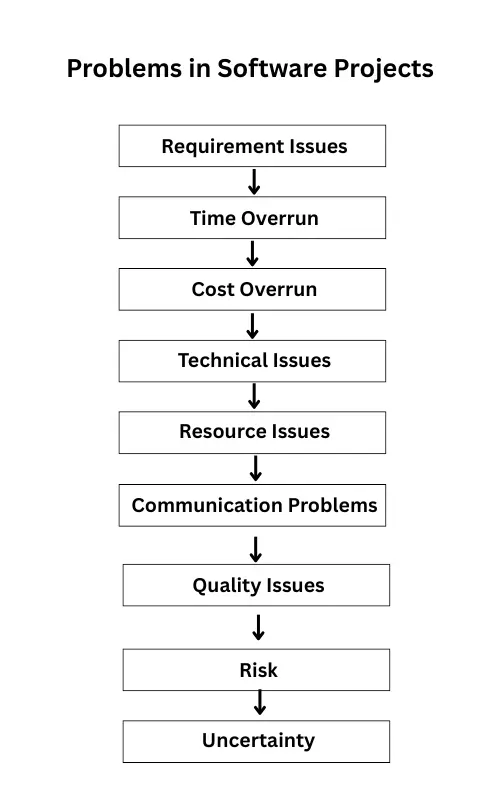
Figure: Various Problems in Software Projects
How to Overcome Problems in Software Projects
Software projects often face problems such as unclear requirements, time delays, cost overrun, technical issues, and communication gaps. These problems can affect project quality and performance if they are not handled properly. Therefore, it is important to take proper steps to overcome these challenges. Effective project management, proper planning, and teamwork help in reducing risks and improving project success. Moreover, using modern tools and clear communication makes project execution smoother. Thus, overcoming software project problems ensures timely delivery, better quality, and customer satisfaction.
Following are the steps to overcome problems in software projects:-
1. Clear Requirement Analysis
Clear requirement analysis helps in understanding user needs properly before starting the project. The project team should collect complete and accurate requirements from clients. Moreover, proper documentation and regular meetings reduce confusion and misunderstandings. Requirement validation ensures that all features are clearly defined. Early clarification prevents frequent changes and rework. Therefore, clear requirement analysis helps in smooth project development and reduces future problems.
2. Proper Project Planning and Scheduling
Proper planning and scheduling help in managing time and resources effectively. The project manager should create a detailed project plan with clear deadlines and milestones. Moreover, dividing tasks into smaller parts makes work easier to manage. Regular monitoring helps in identifying delays at an early stage. Project management tools improve coordination and tracking. Therefore, good planning ensures timely completion of software projects.
3. Effective Cost Management
Effective cost management helps in controlling project expenses and maintaining the budget. The project manager should prepare a realistic cost estimation before starting the project. Moreover, regular financial monitoring helps in avoiding unnecessary spending. Proper resource allocation reduces extra costs. Budget planning and control ensure financial stability in the project. Therefore, effective cost management helps prevent budget overrun.
4. Use of Updated Technology and Training
Using updated technology helps in solving technical problems in software projects. Developers should receive proper training to work with new tools and programming languages. Moreover, modern technologies improve system performance and reliability. Technical support and regular testing reduce system errors. Continuous learning helps the team handle complex tasks efficiently. Therefore, updated technology and training improve project quality and productivity.
5. Proper Resource Management
Proper resource management ensures that skilled team members and tools are available for the project. The project manager should assign tasks based on team members’ skills and experience. Moreover, balanced workload improves productivity and reduces stress. Regular performance evaluation helps in better resource utilization. Proper planning ensures smooth project execution. Therefore, resource management plays an important role in project success.
6. Strong Communication System
Strong communication helps in reducing misunderstandings and confusion among team members. The project manager should maintain regular communication with clients and team members. Moreover, meetings, reports, and emails help in sharing project updates clearly. Feedback and discussions improve coordination and teamwork. Clear communication ensures that everyone understands project goals. Therefore, strong communication leads to better project performance.
7. Quality Assurance and Testing
Quality assurance and testing help in improving software performance and reliability. The testing team should check the software at each development stage. Moreover, following quality standards ensures error-free software. Continuous testing reduces bugs and system failures. Proper quality control improves customer satisfaction. Therefore, quality assurance ensures a stable and reliable software product.
8. Risk Management and Monitoring
Risk management helps in identifying and controlling unexpected problems in software projects. The project manager should analyze possible risks and prepare backup plans. Moreover, regular monitoring helps in detecting issues early. Preventive measures reduce project uncertainty. Proper risk planning ensures project stability and safety. Therefore, risk management helps in handling future challenges effectively.
Conclusion
Software projects face various problems such as requirement issues, time and cost overrun, technical difficulties, resource shortages, communication gaps, quality issues, and risks. However, these problems can be overcome through proper planning, clear requirement analysis, effective communication, and strong project management practices. Moreover, the use of modern tools, skilled team members, and continuous monitoring helps in reducing project challenges. Quality assurance and risk management also ensure smooth project execution and better performance. Therefore, overcoming problems in software projects leads to timely delivery, high-quality software, and successful project completion.